Showing posts with label diffusion. Show all posts

Sunday, 20 December 2015

Systems thinking skills

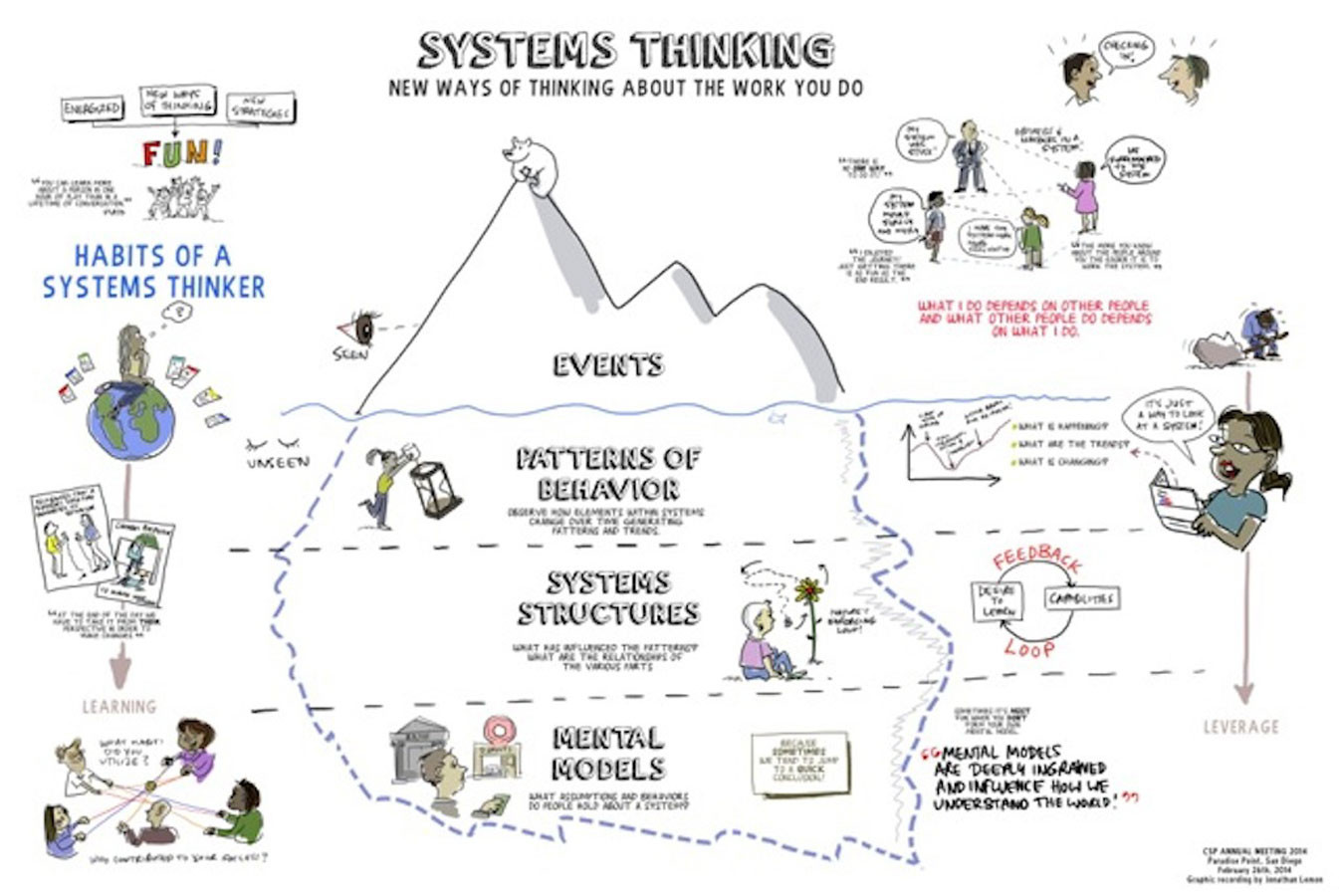
Source: Originally found here. Please read and study this concept mapView in a new windowwhich shows some common skills associated with systems thinking.

Wednesday, 9 December 2015

What types of careers are there in international development?


Skills (What you can do!)
  • All skills needed!!
Functions (What role you would play!)
You may have 1 or more of these skills!
  • Fundraising - storytelling, strategy, communications, budgeting, networking, relationship building, research, project management
  • Policy - research, communications, legal, institutional development, relationship building, politics
  • Institutional development - research, governance, relationship building, politics
  • Economic development - economic modelling, industrial development, market systems strategy, welfare 
  • Social welfare - advocacy, social welfare subsidies, charity work, 
  • Private sector development - business innovation, enterprise development, enabling environment, entrepreneurship, taxation and legal
  • Marketing and retail - commerce, business management, sociology, psychology, policy and/or network development
  • Operations - logistics, network management, project management, finance, and/or results measurement 
  • HRM - sociology, psychology, training and development, and/or team building
  • Finance - finance, strategy, M&E, project management, and/or legal
  • Results measurement - finance, strategy, project management, and/or research

New Trends (Where you might position yourself!)
  • Market-based development
  • Socialist market systems
  • Social welfare
  • Ethical business
  • Fintech
  • Behaviourial sciences
  • Systems change
  • Resilience
  • Conflict 
  • Livestock
  • Healthcare
  • Climate and the natural environment
  • Informal sector
  • NGO organisational development
  • Foundation funding
Things to Remember!
  • Be different - If you have good ideas that seem too out-of-the-box for traditional work, this could be the right time to build a skills around it and offer that skill to the development space
  • Look deeper than large institutions - If you want to learn on the job, develop tangible skills and be part of an impactful project, start at the field and work upwards
  • Competences are important - teamwork, patience, time management, critical thinking, adaptability, focus and determination

Thursday, 12 November 2015

RCTs in poverty reduction and development: why are some practitioners abandoning RCTs?

This blogpost about ethics in international development is about a randomised control trial (RCT) in Kenya. In the experiment, some households in Kenya were given unconditional cash transfers of either USD 404 or USD 1525. The researchers found, unsurprisingly, that the lucky ones were happier and that their unlucky neighbours were unhappy. The paper is aptly titled “Your Gain is my Pain”.

Most importantly, however, the blogger reflects on why this type of research is done at all: "Am I the only one to think that is not ethical dishing out large sums of money in small communities and observing how jealous and unhappy this makes the unlucky members of these tight knit communities?" 

For myself, as a development practitioner with a systems thinking perspective, RCTs can come across as having very limited usefulness and application. They can also be quite machine-based: they either choose to wilfully ignore human behaviour or they simply limit their interactions with other disciplines (psychology, sociology, anthropology) so that they can create more simple hypotheses. Thus, it is felt that the applicability of an RCT for complex problems (such as systemic poverty) is limited.

The RCT we have seen from Kenya seems to fall into that trap too. This RCT seems to need to test the notion that poor people in Kenya might not exhibit the same reactions and behaviours as other people. As if the nature of the human condition (in Africa) is under exploration. To me, this is strange and feels like the original hypotheses might have been drastically distilled and reduced down to overly simplified thoughts.

I wonder how the findings would actually be useful to policy and projects. Who might need proofs from an RCT that Kenyans are like any other human being? How could such research be useful for development planning at an economic or social level? Why is the notion that proving that desperation, jealously and unhappiness occurs among very poor people is valuable? I would also wonder what long-lasting impact this type of research would have on social relationships in the communities in the future.

Globally, there is a large community of development practitioner who feel that RCTs in poverty interventions are not ethical and not useful. From my conversations with them, they make the following points:
  1. In many RCTs, an assumption is made that the the groups will not be communicating with each other. However, it is actually very difficult to have demarcated and clear boundaries for the treatment groups to be adequately isolated. People talk. Information can flow through multiple channels and through multiple mechanisms (face-to-face, mobile phone, internet, etc) across groups, geographies, social hierarchies, institutions, etc. 
  2. In RCTs, people might be very desperate because of the psychological and social impact of poverty and crisis. In this case all the RCT does is exacerbate that desperation and exacerbate those behaviours that present themselves when people are in desperate situations. The results are therefore naturally biased and skewed and outlying when compared to any group at any point in time. This is not adequately recognised in RCTs and thus not at all reflected when RCTs attempt to influence policy and project applications.
  3. Over time, the RCT can have a lasting negative impact. Those RCTs which test the type of reactions as the one featured here in Kenya - jealousy and unhappiness - can damage social relationships between individuals and groups even after the trial has ended. Real people are not as adept to switching off their pain and trauma (and any additional feelings of betrayal, anger, envy, frustration, etc.) as machines might be able to! 

Wednesday, 22 July 2015

Article - In health, let countries run their own programmes and take a systems perspective

A nice blog on lessons learnt in global health. Advice? Let poor countries run their own programmes and take a systems perspective ...

This blog was originally published here on the Guardian website.


Lessons in global health: let poor countries run their own programmes

In 2008, Square Mkwanda found himself in a quandary: international pharmaceutical companies had just donated millions of dollars worth of drugs to treat Neglected Tropical Diseases (NTDs) in his native Malawi but the civil servant had no money to distribute them and they were stockpiling in the ministry of health’s warehouses. “I thought, what am I going to tell pharmaceutical companies? That I let billions of kwachas’ [Malawi’s currency] worth of drugs expire because we couldn’t spend just a few millions to distribute them?”
So he talked to his minister of health and they managed to free up enough funds to distribute the drugs in eight districts. By 2009, the distribution programme had reached all 26 districts and was entirely funded by Malawi. Seven years on, Mkwanda, who is the lymphatic filariasis (LF) and NTD coordinator at Malawi’s ministry of health, proudly announced that Malawi has interrupted transmission of LF (pdf), the second country in Africa to do so.


Leadership like that demonstrated by Malawi was one of the key themes in thethird progress report of the London declaration on NTDs, produced by the consortium Uniting to Combat NTDs and released at the end of June. The report said: “Endemic countries are demonstrating strong ownership and leadership, in variable financial, political and environmental circumstances, to ensure their NTD programs are successful in meeting 2020 targets. Countries are achieving elimination goals, more people are being reached, and the drug donation program for NTDs, the largest public health drug donation program in the world, continues to grow.”
In the wake of the Ebola crisis and in preparation for the sustainable development goals, these success stories are important best practice examples for the global health community as it rethinks how to effectively deliver sustainable programmes. Recognising the opportunities for lessons learned, the World Health Organisation called the elimination and control of NTDs a “litmus test for universal health coverage (UHC)” – one of the targets of the new development agenda.
Other countries are joining Malawi to take charge of their public health initiatives. Bangladesh, the Philippines and India are now financing 85%, 94% and 100% of their NTD programmes respectively. Motivated by growing evidence of the impact of NTDs on child development and productivity (and as a result on economic growth) 26 endemic countries met in December 2014 to sign the Addis Ababa NTD Commitment, in which they agreed to increase domestic investment for NTD programme implementation. The Addis commitment was an initiative of Ethiopia’s minister of health Kesetebirhan Admasu. Explaining why more governments are showing interest in this work, Admasu said: “NTDs are not only a health agenda, but a development agenda too, for which the poor pay the highest price.”
These country-owned programmes come in different guises but at the heart of every successful one is an integrated, multi-sectoral approach. Ethiopia for instance requires that every partner working on trachoma implement the fullSAFE strategy – Surgery, Antibiotics, Facial Hygiene, Environmental Improvements – and not just the ‘S’ or ‘A’, on which development programmes tend to focus.
Brazil decided to include NTDs in its national poverty reduction programme, which has other development targets such as education, water and sanitation. Municipalities, who implement the programme, are given free rein to tailor interventions to best suit their circumstances (a peri-urban municipality would have different issues from an Amazonian location for instance). 
Other countries used the single funded programme they had – onchocerciasis in Burundi’s case – as the building block to a fully integrated, multi-disease programme. There the ministry of health put in place a dedicated NTD team and worked with national and international partners to build a national programme that has been immensely successful. By end of the programme in 2011, national prevalence of schistosomiasis had been reduced from 12% to 1.4%


Country ownership doesn’t just encourage policymakers to come up with strategies to reach their entire populations with health interventions but it also enables them to practice good resource management. Mkwanda says that NTDs brought good discipline at the ministry of health. “As with NTDs, we sit and budget. And we do not segregate diseases – integration isn’t just for NTDs, it’s for the whole essential care package.” 
The story gets even better as countries in the global south, such as Brazil and Nigeria, are not just coming up with their own programmes but also funding others’. Marcia de Souza Lima, deputy director of the Global Network for Neglected Tropical Diseases says the new funding streams will guarantee that NTD programmes outlive traditional support (a large proportion from philanthropic foundations) but she concedes it also makes them susceptible to leadership change – although recent elections in Brazil and Nigeria suggest this hasn’t been the case.

Monday, 13 July 2015

Article - Diffusion of innovations theory

Diffusion of innovations

Diffusion of innovations is a theory that seeks to explain how, why, and at what rate new ideas and technology spread through culturesEverett Rogers, a professor of communication studies, popularized the theory in his book Diffusion of Innovations; the book was first published in 1962, and is now in its fifth edition (2003).[1] Rogers argues that diffusion is the process by which an innovation is communicated through certain channels over time among the participants in a social system. The origins of the diffusion of innovations theory are varied and span multiple disciplines. Rogers proposes that four main elements influence the spread of a new idea: the innovation itself, communication channels, time, and a social system. This process relies heavily on human capital. The innovation must be widely adopted in order to self-sustain. Within the rate of adoption, there is a point at which an innovation reaches critical mass. The categories of adopters are: innovators, early adopters, early majority, late majority, and laggards.[2] Diffusion manifests itself in different ways in various cultures and fields and is highly subject to the type of adopters and innovation-decision process.
The key elements in diffusion research are:
ElementDefinition
InnovationInnovations are a broad category, relative to the current knowledge of the analyzed unit. Any idea, practice, or object that is perceived as new by an individual or other unit of adoption could be considered an innovation available for study.[14]
AdoptersAdopters are the minimal unit of analysis. In most studies, adopters are individuals, but can also be organizations (businesses, schools, hospitals, etc.), clusters within social networks, or countries.[15]
Communication channelsDiffusion, by definition, takes place among people or organizations. Communication channels allow the transfer of information from one unit to the other.[16]Communication patterns or capabilities must be established between parties as a minimum for diffusion to occur.[17]
TimeThe passage of time is necessary for innovations to be adopted; they are rarely adopted instantaneously. In fact, in the Ryan and Gross (1943) study on hybrid corn adoption, adoption occurred over more than ten years, and most farmers only dedicated a fraction on their fields to the new corn in the first years after adoption.[6][18]
Social systemThe social system is the combination of external influences (mass media, organizational or governmental mandates) and internal influences (strong and weak social relationships, distance from opinion leaders).[19] There are many roles in a social system, and their combination represents the total influences on a potential adopter.[20]

Five stages of the adoption process
StageDefinition
KnowledgeThe individual is first exposed to an innovation, but lacks information about the innovation. During this stage the individual has not yet been inspired to find out more information about the innovation.
PersuasionThe individual is interested in the innovation and actively seeks related information/details.
DecisionThe individual takes the concept of the change and weighs the advantages/disadvantages of using the innovation and decides whether to adopt or reject the innovation. Due to the individualistic nature of this stage, Rogers notes that it is the most difficult stage on which to acquire empirical evidence.[11]
ImplementationThe individual employs the innovation to a varying degree depending on the situation. During this stage the individual also determines the usefulness of the innovation and may search for further information about it.
ConfirmationThe individual finalizes his/her decision to continue using the innovation. This stage is both intrapersonal (may cause cognitive dissonance) and interpersonal, confirmation the group has made the right decision.
Change agents bring innovations to new communities– first through the gatekeepers, then through the opinion leaders, and so on through the community.
Adopter categoryDefinition
InnovatorsInnovators are willing to take risks, have the highest social status, have financial liquidity, are social and have closest contact to scientific sources and interaction with other innovators. Their risk tolerance allows them to adopt technologies that may ultimately fail. Financial resources help absorb these failures. [40]
Early adoptersThese individuals have the highest degree of opinion leadership among the adopter categories. Early adopters have a higher social status, financial liquidity, advanced education and are more socially forward than late adopters. They are more discreet in adoption choices than innovators. They use judicious choice of adoption to help them maintain a central communication position.[41]
Early MajorityThey adopt an innovation after a varying degree of time that is significantly longer than the innovators and early adopters. Early Majority have above average social status, contact with early adopters and seldom hold positions of opinion leadership in a system (Rogers 1962, p. 283)
Late MajorityThey adopt an innovation after the average participant. These individuals approach an innovation with a high degree of skepticism and after the majority of society has adopted the innovation. Late Majority are typically skeptical about an innovation, have below average social status, little financial liquidity, in contact with others in late majority and early majority and little opinion leadership.
LaggardsThey are the last to adopt an innovation. Unlike some of the previous categories, individuals in this category show little to no opinion leadership. These individuals typically have an aversion to change-agents. Laggards typically tend to be focused on "traditions", lowest social status, lowest financial liquidity, oldest among adopters, and in contact with only family and close friends.
LeapfroggersWhen resistors upgrade they often skip several generations in order to reach the most recent technologies.
Source: Wikipedia