Showing posts with label sustainability. Show all posts

Thursday, 23 June 2016

Marjorie Kelly on the Emergent Ownership Revolution

Do you need something more tangible to use when talking about social business?
Is the 'social purpose' argument a bit thin for you?

According to Marjorie Kelly in Towards Mission-Controlled Corporations: Extractive vs Generative Design there are 5 elements of a generative ownership-driven design framework for social businesses:
  1. Membership – How can we have the right people forming part of the business? How can they contribute to the running of the business? What roles and authority can they have?
  2. Purpose – What purpose can a business have beyond profit-making for shareholders? What problems might it solve? How is 'wealth', and value spread within the local community?
  3. Governance – Who is the board? Who does the board answer to? 
  4. Finance – Where does the money come from? Where does it go? How does it circulate through the business? How does it generate wealth and value?
  5. Networks – How does the business get access to goods, services, information? How might the exchange be carried out? How might it be non-financial? How might it reach beyond typical boundaries e.g. geography?

Saturday, 5 December 2015

What does it mean to do ethical business in apparel?

What value do ethical standards bring to the fashion industry?
What does it mean to be ethical in fashion ?
What is the business case for ethical fashion?
  • Product development that sources and uses raw materials according to sustainability regulations/norms/codes/standards/values in the industry 
  • Product design that reflects stories from different people and different culture (i.e. non-normative, beyond the Western beauty ideal) and in a way that respects ownership and that protects against cultural appropriation for profit
  • Innovation based on participative collaboration that understands power structures and control/equality/equity issues 
  • Ensuring that wage payments, work health and safety conditions and regulations are observed, external audits and inspections are supported and violence and illegal practices are addressed through a fair justice system (Guardian)
  • Working with producers and suppliers in developing countries: meeting regulations and codes and respecting power imbalances in ethical management styles and monitoring systems
  • A systemic approach to certification/regulations/norms/codes/standards to bring about sustainability and scale and builds on the successes of supply chain strengthening (multi-stakeholder governance, transparency, independent verification, and third party chain of custody) (Business Fights Poverty)
  • Creating a demand for ethical fashion by using multi-channel retail opportunities including pop-ups to showcase the brand the product and the story
  • Ensuring that the pricing model allows producers and suppliers to be paid a living/decent wage even when it means charging the retailer or consumer a few pence more. The recent example of dairy farmers in the UK removing milk from supermarket shelves in an attempt to sell it directly to the consumer to get a better price.
  • Understanding that in fashion there is economic value to the 'story' in the same way that any brand builds equity - through rational, emotional and behaviourial consumer analysis
  • The impact on retail pricing - what is the market willing to pay?
  • Businesses that 'work in Africa' do not automatically mean social enterprise or ethical sourcing
  • Making your claims of ethical business practices credible and possible to observe and verify. Consumer driven - Mintel found that half of those surveyed said they would only pay more for ethical products if they understood clearly where the extra money went, and 52 per cent said they found information about which foods are ethical confusing (Supplymanagement.com)
  • Working on textile waste to minimise, recycle, reuse, upcycle, upgrade, re-configure, re-integrate, and more (The Ethical Fashion Source)


---
http://www.theguardian.com/world/2015/aug/10/lithuanian-migrants-chicken-catchers-trafficked-uk-egg-farms-sue-worst-gangmaster-ever
http://source.ethicalfashionforum.com/article/recycling-on-the-high-street-3-different-approaches

A systems perspective to supply chain development

In classic economic theory, making products cheaper by reducing the cost of goods (COGS) can mean removing the intermediaries in the supply chain where margin might be absorbed. This means system actors, such as agents, middlemen/women, traders, small retailers (kiosks) are vulnerable to the disintermediation. However, in low-income countries, this has a system wide effect: this will limit the supply of goods and services to marginalized populations, such as smallholder farmers or the urban poor and this will reduce employment and revenue generation by cutting the poor out of the system. Moreover, in times of desperation, this will naturally create conflict and instability that will have even more far-reaching effects beyond the original supply chain.

Things to remember:
  • For real wide-scale change, take a step back and think more systemically and less narrowly and think about the wider impact of any intervention in business operations, pricing and COGS. 
  • Rather than a focus on cost, price and money, consider gains that bring about long-term growth, such as quality, value and service-driven loyalty
  • Yes, eliminating supply chain actors may reduce the cost of goods along the way, but there is no guarantee that this will be passed on to the customer.  
  • Intermediaries are the backbone of a system and agents, traders, kiosks are ever present in a market - work through them rather than against them or by sidelining them
  • Look at where the incentives lie. For a supplier, that wants to shed certain costs, who might be willing to take them on? Who might benefit? Who might see the value in managing this transaction directly? This is essentially the origination of outsourcing.
  • Consider how the market could function better. As a supplier, you may be incurring a huge cost getting products to the consumer. However, if a retailer can offer a better coordination function, then it would make more sense to switch to wholesale operations. Many retailers in developing countries do this albeit with  need for capacity building around effective management. 

Thursday, 12 November 2015

Why might some poverty reduction project incorporate behaviour change theories?

Nudges
(behaviour change tactics)
  • Commitment device. A commitment device is a choice that an individual makes in the present which restricts his own set of choices in the future, often as a means of controlling future impulsive behavior and limiting choices to those that reflect long-term goals.
  • Loss aversion. More pain with loss than the pleasure for what we gain. The customers that cancel with you are more worried about what they will lose than what they could gain by switching and going elsewhere
System actors
(for market actors integrating nudges)
Market actors who may be interested in behaviour change nudges are diverse. We see commercial enterprises looking to develop a customer base within a low-income population at the bottom-of-the-pyramid; we see Governments wanting to affect the behaviour of citizens such as through giving up smoking, reducing speeds on the roads and paying taxes on time; and we see opinion leaders/institutions/social networks wanting to influence and change socio-cultural dynamics - think of #blacklivesmatter.

System change
(why?)
We think that some behaviour change nudging is needed when the context is new for people, such as a unprecedented growth in the market economy, or recent modernisation, or evolving non-traditional systems, or new sectors and economic activity that require new practice and behaviours.

Facilitation using behaviour change
(for development practitioners)
  • Avoid prescribing behaviour. Instead, help system actors find the behaviour they want to adopt; let it be self-deterministic and self-motivated. This makes it easier to find the right nudge - through the process, system actors will indicate the right nudge for them and what it will take to adhere to the effects of the nudge. 
  • Be intuitive and look for deeper narratives. System actors will tell you what they want but this will not be overt, out-loud and obvious. This will be through their attitudes, behaviours, mindset, actions, and perceptions. You will need to read all of these cues to understand the full script of what the actor is (not) saying to you.
  • Look into the socio-economic benefits for sharing the costs of desgining and implementing nudges and the socio-economic benefits for the value created. This should be the basis for programming the nudge into the market system
  • Celebrate the effort not just the intellect. Telling people that they are smart and intelligent can create situations where the individual relies on their intelligence to get them through complex situations. Often what is needed more is a combination of patience, commitment, sacrifice, and possibly super-normal hard work (= effort)

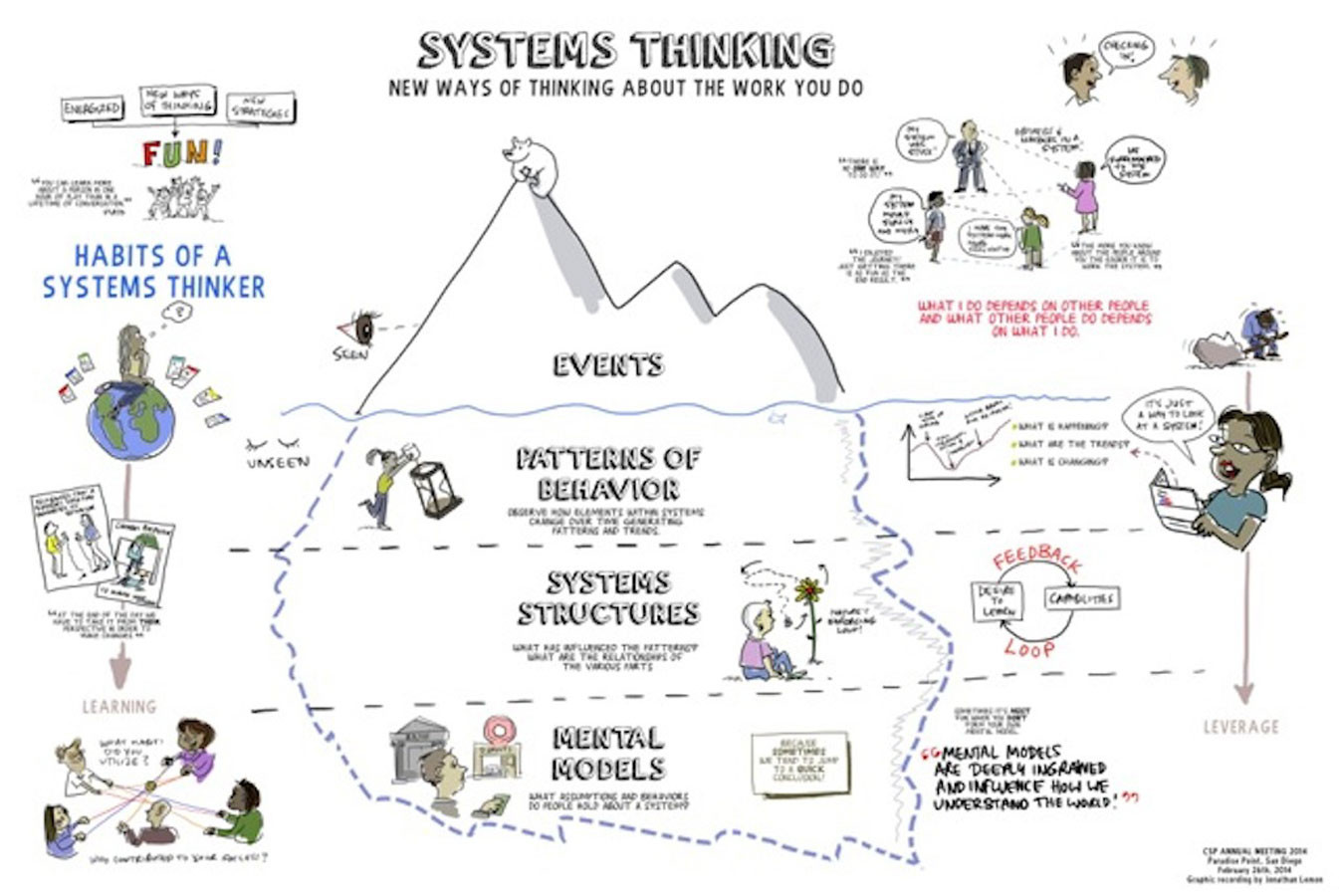
Saturday, 22 August 2015

What does a market system specialist like me do?

Economic Development
  • Develop retail networks in developing countries to get products and services in the hands of low-income marginalised consumers
  • Help aid programmes do more systemic social welfare through systemic safety net programmes
  • Improve the enabling environment for MSMEs and the informal sector  
Social Business and CSR
  • Look at supply chain interventions that go beyond the value chain approach and take more of a systemic perspective that actually deliver benefits to poor farmers 
  • Identify different areas where CSR can be better programmed by way of a market systems approach
  • Integrate the private sector into market systems approaches that have historically focused on socialist mechanisms (large State, community associations, NGOs)
  • Work with system actors to identify areas where market systems development will make a difference
Behaviour Change
  • Train practitioners on behaviour change and behaviour change methodologies to help projects deliver systemic solutions 
  • Design behaviour change tools to improve the adoption and commitment of poor people to long terms savings and investments practices

Monday, 27 July 2015

The many faces of CSR - some concerns

CSR is ...

... a collection of small piecemeal fixes that cost millions whilst companies stand in the way of wider systemic reforms (The Atlantic)

... a response to and/or a driver of ineffective regulation and enforcement mechanisms (aka corruption) (NBER Working Paper)

... the antithesis of sustainable? doing as much (or as little) as the legal compliance frameworks deem necessary, social (green)washing, a disregard for systems change and an appropriation of cheap labour and culture... (Triple Pundit)

... old, redundant and anemic, desperately seeking new energy to bring about real change both within the organisations, which espouse it as well within the markets, economies and systems in which they operate? (New Global Citizen)

... missing an opportunity to respond to new consumer-driven preferences and evolving buying behaviour?
  • Tetra Pak research found that 60 per cent of consumers that they surveyed said that they would look for environmental information on products they buy and would be influenced by what they read
  • In a survey by Mintel, 60 per cent of respondents said that guaranteeing that ingredients used in its products are responsibly sourced was of major importance (Supplymanagement.com)
  • Several brands, such as Fairtrade, pay producers a higher wage than other buyer. They demonstrate the market for niche consumer groups that have a willingness and ability to pay a significant premium for higher quality product 
  • Labour Behind the Label also makes the point that paying producers a living wage for basic products, such as t-shirts, may mean increasing the retail price by only 3%, which is something that might be barely noticed by a customer


...
http://www.supplymanagement.com/news/2015/responsible-sourcing-a-key-concern-for-majority-of-uk-consumers