Showing posts with label learning. Show all posts

Thursday, 23 June 2016

Marjorie Kelly on the Emergent Ownership Revolution

Do you need something more tangible to use when talking about social business?
Is the 'social purpose' argument a bit thin for you?

According to Marjorie Kelly in Towards Mission-Controlled Corporations: Extractive vs Generative Design there are 5 elements of a generative ownership-driven design framework for social businesses:
  1. Membership – How can we have the right people forming part of the business? How can they contribute to the running of the business? What roles and authority can they have?
  2. Purpose – What purpose can a business have beyond profit-making for shareholders? What problems might it solve? How is 'wealth', and value spread within the local community?
  3. Governance – Who is the board? Who does the board answer to? 
  4. Finance – Where does the money come from? Where does it go? How does it circulate through the business? How does it generate wealth and value?
  5. Networks – How does the business get access to goods, services, information? How might the exchange be carried out? How might it be non-financial? How might it reach beyond typical boundaries e.g. geography?

Tuesday, 9 February 2016

Sunday, 20 December 2015

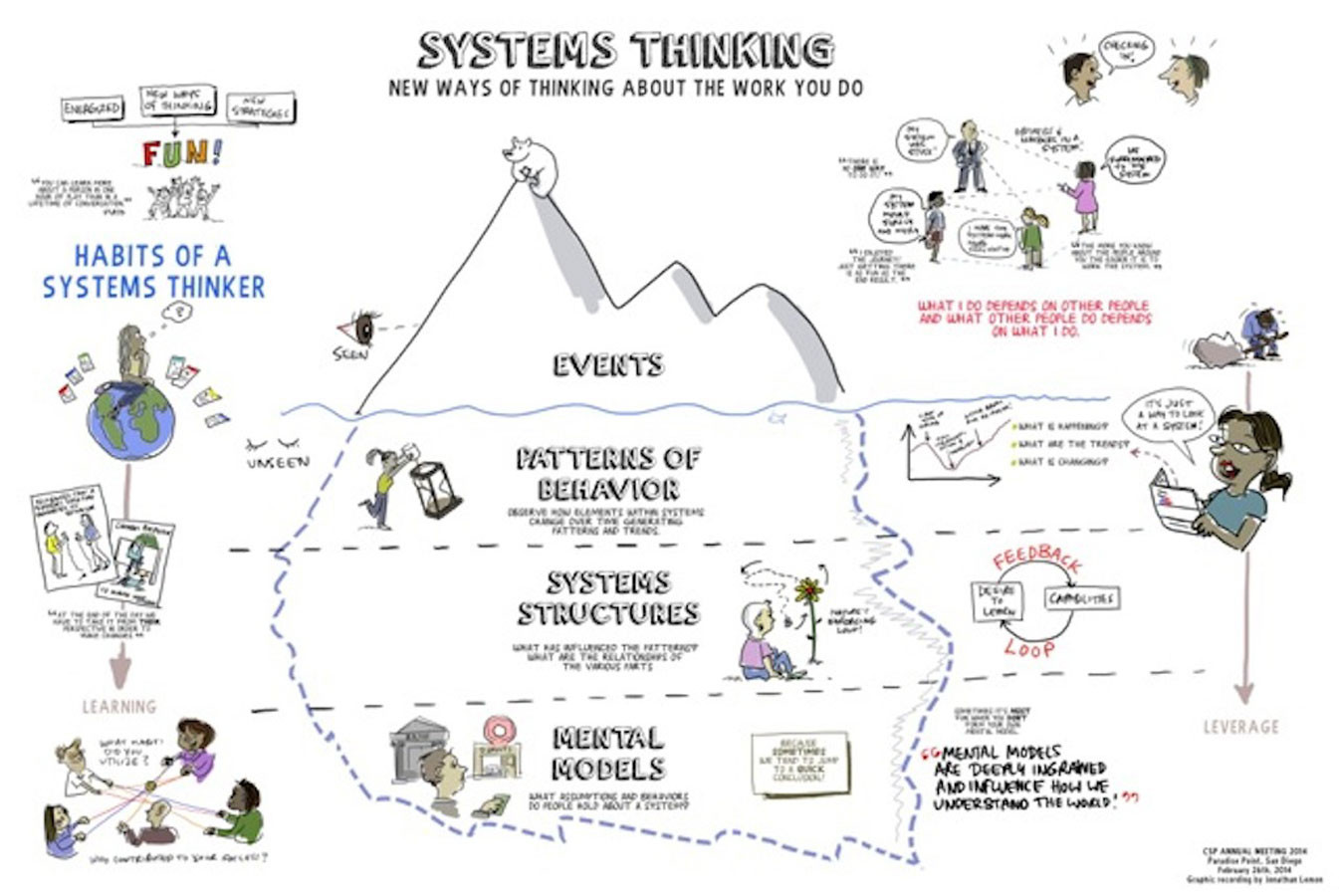
Systems thinking skills

Source: Originally found here. Please read and study this concept mapView in a new windowwhich shows some common skills associated with systems thinking.

Wednesday, 9 December 2015

What types of careers are there in international development?


Skills (What you can do!)
  • All skills needed!!
Functions (What role you would play!)
You may have 1 or more of these skills!
  • Fundraising - storytelling, strategy, communications, budgeting, networking, relationship building, research, project management
  • Policy - research, communications, legal, institutional development, relationship building, politics
  • Institutional development - research, governance, relationship building, politics
  • Economic development - economic modelling, industrial development, market systems strategy, welfare 
  • Social welfare - advocacy, social welfare subsidies, charity work, 
  • Private sector development - business innovation, enterprise development, enabling environment, entrepreneurship, taxation and legal
  • Marketing and retail - commerce, business management, sociology, psychology, policy and/or network development
  • Operations - logistics, network management, project management, finance, and/or results measurement 
  • HRM - sociology, psychology, training and development, and/or team building
  • Finance - finance, strategy, M&E, project management, and/or legal
  • Results measurement - finance, strategy, project management, and/or research

New Trends (Where you might position yourself!)
  • Market-based development
  • Socialist market systems
  • Social welfare
  • Ethical business
  • Fintech
  • Behaviourial sciences
  • Systems change
  • Resilience
  • Conflict 
  • Livestock
  • Healthcare
  • Climate and the natural environment
  • Informal sector
  • NGO organisational development
  • Foundation funding
Things to Remember!
  • Be different - If you have good ideas that seem too out-of-the-box for traditional work, this could be the right time to build a skills around it and offer that skill to the development space
  • Look deeper than large institutions - If you want to learn on the job, develop tangible skills and be part of an impactful project, start at the field and work upwards
  • Competences are important - teamwork, patience, time management, critical thinking, adaptability, focus and determination

Saturday, 5 December 2015

What does it mean to do ethical business in apparel?

What value do ethical standards bring to the fashion industry?
What does it mean to be ethical in fashion ?
What is the business case for ethical fashion?
  • Product development that sources and uses raw materials according to sustainability regulations/norms/codes/standards/values in the industry 
  • Product design that reflects stories from different people and different culture (i.e. non-normative, beyond the Western beauty ideal) and in a way that respects ownership and that protects against cultural appropriation for profit
  • Innovation based on participative collaboration that understands power structures and control/equality/equity issues 
  • Ensuring that wage payments, work health and safety conditions and regulations are observed, external audits and inspections are supported and violence and illegal practices are addressed through a fair justice system (Guardian)
  • Working with producers and suppliers in developing countries: meeting regulations and codes and respecting power imbalances in ethical management styles and monitoring systems
  • A systemic approach to certification/regulations/norms/codes/standards to bring about sustainability and scale and builds on the successes of supply chain strengthening (multi-stakeholder governance, transparency, independent verification, and third party chain of custody) (Business Fights Poverty)
  • Creating a demand for ethical fashion by using multi-channel retail opportunities including pop-ups to showcase the brand the product and the story
  • Ensuring that the pricing model allows producers and suppliers to be paid a living/decent wage even when it means charging the retailer or consumer a few pence more. The recent example of dairy farmers in the UK removing milk from supermarket shelves in an attempt to sell it directly to the consumer to get a better price.
  • Understanding that in fashion there is economic value to the 'story' in the same way that any brand builds equity - through rational, emotional and behaviourial consumer analysis
  • The impact on retail pricing - what is the market willing to pay?
  • Businesses that 'work in Africa' do not automatically mean social enterprise or ethical sourcing
  • Making your claims of ethical business practices credible and possible to observe and verify. Consumer driven - Mintel found that half of those surveyed said they would only pay more for ethical products if they understood clearly where the extra money went, and 52 per cent said they found information about which foods are ethical confusing (Supplymanagement.com)
  • Working on textile waste to minimise, recycle, reuse, upcycle, upgrade, re-configure, re-integrate, and more (The Ethical Fashion Source)


---
http://www.theguardian.com/world/2015/aug/10/lithuanian-migrants-chicken-catchers-trafficked-uk-egg-farms-sue-worst-gangmaster-ever
http://source.ethicalfashionforum.com/article/recycling-on-the-high-street-3-different-approaches

New to international development - Where to look for job opportunities?

Books


Research/Think Tanks
Opportunities are for more seasoned development professionals with 5 years or so experience
CSR Networks
Opportunities are emerging - from communications to technical assistance on projects
Social Business
Opportunities are emerging - technical assistance, field work
Corporate Foundations
International Charities
  • International Red Cross
  • World Vision
  • Save the Children
  • Oxfam
Opportunities are communications, fundraising, project management, team coaching; may provide training to get you field-ready (smaller NGOs might be willing and able to send you directly to the field)

Development Consultancies
  • DAI
  • Adam Smith International
  • Cardno Emerging Markets
  • GIZ
  • ITAD
  • The Springfield Centre
Opportunities are in research, policy, monitoring and evaluation, project management; long term roles will get you field-ready on formal secondments or assignments, however, generally the roles are West-based

Practitioner Networks
Opportunities are for seasoned professionals with 5-8 years experience under their belt

Thursday, 12 November 2015

Why might some poverty reduction project incorporate behaviour change theories?

Nudges
(behaviour change tactics)
  • Commitment device. A commitment device is a choice that an individual makes in the present which restricts his own set of choices in the future, often as a means of controlling future impulsive behavior and limiting choices to those that reflect long-term goals.
  • Loss aversion. More pain with loss than the pleasure for what we gain. The customers that cancel with you are more worried about what they will lose than what they could gain by switching and going elsewhere
System actors
(for market actors integrating nudges)
Market actors who may be interested in behaviour change nudges are diverse. We see commercial enterprises looking to develop a customer base within a low-income population at the bottom-of-the-pyramid; we see Governments wanting to affect the behaviour of citizens such as through giving up smoking, reducing speeds on the roads and paying taxes on time; and we see opinion leaders/institutions/social networks wanting to influence and change socio-cultural dynamics - think of #blacklivesmatter.

System change
(why?)
We think that some behaviour change nudging is needed when the context is new for people, such as a unprecedented growth in the market economy, or recent modernisation, or evolving non-traditional systems, or new sectors and economic activity that require new practice and behaviours.

Facilitation using behaviour change
(for development practitioners)
  • Avoid prescribing behaviour. Instead, help system actors find the behaviour they want to adopt; let it be self-deterministic and self-motivated. This makes it easier to find the right nudge - through the process, system actors will indicate the right nudge for them and what it will take to adhere to the effects of the nudge. 
  • Be intuitive and look for deeper narratives. System actors will tell you what they want but this will not be overt, out-loud and obvious. This will be through their attitudes, behaviours, mindset, actions, and perceptions. You will need to read all of these cues to understand the full script of what the actor is (not) saying to you.
  • Look into the socio-economic benefits for sharing the costs of desgining and implementing nudges and the socio-economic benefits for the value created. This should be the basis for programming the nudge into the market system
  • Celebrate the effort not just the intellect. Telling people that they are smart and intelligent can create situations where the individual relies on their intelligence to get them through complex situations. Often what is needed more is a combination of patience, commitment, sacrifice, and possibly super-normal hard work (= effort)

RCTs in poverty reduction and development: why are some practitioners abandoning RCTs?

This blogpost about ethics in international development is about a randomised control trial (RCT) in Kenya. In the experiment, some households in Kenya were given unconditional cash transfers of either USD 404 or USD 1525. The researchers found, unsurprisingly, that the lucky ones were happier and that their unlucky neighbours were unhappy. The paper is aptly titled “Your Gain is my Pain”.

Most importantly, however, the blogger reflects on why this type of research is done at all: "Am I the only one to think that is not ethical dishing out large sums of money in small communities and observing how jealous and unhappy this makes the unlucky members of these tight knit communities?" 

For myself, as a development practitioner with a systems thinking perspective, RCTs can come across as having very limited usefulness and application. They can also be quite machine-based: they either choose to wilfully ignore human behaviour or they simply limit their interactions with other disciplines (psychology, sociology, anthropology) so that they can create more simple hypotheses. Thus, it is felt that the applicability of an RCT for complex problems (such as systemic poverty) is limited.

The RCT we have seen from Kenya seems to fall into that trap too. This RCT seems to need to test the notion that poor people in Kenya might not exhibit the same reactions and behaviours as other people. As if the nature of the human condition (in Africa) is under exploration. To me, this is strange and feels like the original hypotheses might have been drastically distilled and reduced down to overly simplified thoughts.

I wonder how the findings would actually be useful to policy and projects. Who might need proofs from an RCT that Kenyans are like any other human being? How could such research be useful for development planning at an economic or social level? Why is the notion that proving that desperation, jealously and unhappiness occurs among very poor people is valuable? I would also wonder what long-lasting impact this type of research would have on social relationships in the communities in the future.

Globally, there is a large community of development practitioner who feel that RCTs in poverty interventions are not ethical and not useful. From my conversations with them, they make the following points:
  1. In many RCTs, an assumption is made that the the groups will not be communicating with each other. However, it is actually very difficult to have demarcated and clear boundaries for the treatment groups to be adequately isolated. People talk. Information can flow through multiple channels and through multiple mechanisms (face-to-face, mobile phone, internet, etc) across groups, geographies, social hierarchies, institutions, etc. 
  2. In RCTs, people might be very desperate because of the psychological and social impact of poverty and crisis. In this case all the RCT does is exacerbate that desperation and exacerbate those behaviours that present themselves when people are in desperate situations. The results are therefore naturally biased and skewed and outlying when compared to any group at any point in time. This is not adequately recognised in RCTs and thus not at all reflected when RCTs attempt to influence policy and project applications.
  3. Over time, the RCT can have a lasting negative impact. Those RCTs which test the type of reactions as the one featured here in Kenya - jealousy and unhappiness - can damage social relationships between individuals and groups even after the trial has ended. Real people are not as adept to switching off their pain and trauma (and any additional feelings of betrayal, anger, envy, frustration, etc.) as machines might be able to! 

Wednesday, 26 August 2015

A video on the three dimensions of the facilitators' role


The video describes the three principal dimensions of the facilitator´s job.


Monday, 24 August 2015

How are MBTI frameworks used to understand behaviour and manage teams?

The source material on cognitive learning styles can be found here on Wikipedia

MBTI for cognitive learning styles
Each is not a polar opposite, but a gradual continuum.
  • Extraversion to Introversion
The extraverted types learn best by talking and interacting with others. By interacting with the physical world, extraverts can process and make sense of new information. The introverted types prefer quiet reflection and privacy. Information processing occurs for introverts as they explore ideas and concepts internally.
  • Sensing/Intuition
The second continuum reflects what a person focuses their attentions on. Sensing types enjoy a learning environment in which the material is presented in a detailed and sequential manner. Sensing types often attend to what is occurring in the present, and can move to the abstract after they have established a concrete experience. Intuitive types prefer a learning atmosphere in which an emphasis is placed on meaning and associations. Insight is valued higher than careful observation, and pattern recognition occurs naturally for Intuitive types.
  • Thinking/Feeling
The third continuum reflects the person’s decision preferences. Thinking types desire objective truth and logical principles and are natural at deductive reasoning. Feeling types place an emphasis on issues and causes that can be personalized while they consider other people's motives.
  • Judging/Perceiving
The fourth continuum reflects how the person regards complexity. Judging types will thrive when information is organized and structured, and they will be motivated to complete assignments in order to gain closure. Perceiving types will flourish in a flexible learning environment in which they are stimulated by new and exciting ideas. Judging types like to be on time, while perceiving types may be late and/or procrastinate.

"Tell me and I will forget, show me and I might remember, involve me and I will understand." - Confucius


Saturday, 22 August 2015

What does a market system specialist like me do?

Economic Development
  • Develop retail networks in developing countries to get products and services in the hands of low-income marginalised consumers
  • Help aid programmes do more systemic social welfare through systemic safety net programmes
  • Improve the enabling environment for MSMEs and the informal sector  
Social Business and CSR
  • Look at supply chain interventions that go beyond the value chain approach and take more of a systemic perspective that actually deliver benefits to poor farmers 
  • Identify different areas where CSR can be better programmed by way of a market systems approach
  • Integrate the private sector into market systems approaches that have historically focused on socialist mechanisms (large State, community associations, NGOs)
  • Work with system actors to identify areas where market systems development will make a difference
Behaviour Change
  • Train practitioners on behaviour change and behaviour change methodologies to help projects deliver systemic solutions 
  • Design behaviour change tools to improve the adoption and commitment of poor people to long terms savings and investments practices

Monday, 27 July 2015

Do market-based approaches hold too many false assumptions?

This blog post from the Institute of Development Studies (IDS) attempts to reflect the main challenges in implementing market-based approaches. It questions the "false assumptions" of market development and systems thinking for poverty reduction.

In fact, what is most evident is that a very damaging assumption held by policy makers and practitioners alike is that market-based approaches simply mean "business" and "market access". In fact these are two outcomes of a functioning market system - among many others - but not the end-goal. In reality, well-designed market-based approaches that adopt systemic principles also deliver the following benefits:
  • Production and supply systems that respond to demand and the needs of the market so that relationships are inherently win-win and about capturing the value within the system 
  • Inclusivity of poor, marginalised, vulnerable groups as key actors and influencers (including, women, youth, disabled, etc.) 
  • Market resilience and the ability of the system to stay strong and react positively to economic, social, political shocks even after any development intervention 
  • Innovation is from within the market itself and emergence of new products and services (both for mainstream as well as niche users)
  • Better relationships between market actors and market-driven design and testing and learning so that products and services respond to market needs 
When talking about market-based systemic approaches to poverty reduction, the first step is for all parties to get on the same page. For advisors to development projects, these are some things to look out for:
  • An inaccurate understanding of systemic thinking and a persistence towards value chain approaches. The former is about the structures, patterns and cycles in systems, and the systemic constraints that affect the functioning of a system (rather than any specific events or element or value chain). Systemic analyses then lead to solutions and leverage points that generate long-term change throughout the wider system (and not for any particular market actor value chain or sector). 
  • Visible conflicts between projects and market partners and disagreements around 'ownership' and 'control'. There can often be a tug-of-war between 'who does' and 'who pays'. The project may be doing too much and be paying too much and can be reticent to relinquish control and allow market forces and systemic pressures to take over. 
  • A lack of understanding of what a better functioning market system looks like. Poverty is often considered a 'wicked problem'. As a result, without diversity for multiple viewpoints in problem-solving, there can often be difficulty in envisioning a better future. Some projects also perceive that by formalising all things informal and turning informal activities into formal value chains will somehow naturally strengthen systems. 
  • A lack of appreciation for (and a fear of) complexity. As a result, there may be a pattern of efforts to simplify, delineate, isolate and control within specific timeframes and outcomes, leading to tick-box approaches to measuring systems change. 
  • A heavy emphasis on quantity over quality in project activities. In particular, a tendency to prioritise activities that promise large impacts for lots of beneficiaries as soon as possible ... over and above interventions at leverage points in the system that take time but draw people into the system and bring about sustainability through relationships, value creation, growth, feedback, market response and evolution 
  • A tendency to directly intervene in the market instead of employing facilitative approaches and market-based tactics. Examples: 
    • running 'project pilots' instead of working through market actors and offering opportunities for 'market exposure and idea testing' 
    • dragging actors into the market through 'cost-sharing' instead of supporting existing interest and willingness for 'early-stage market entry' 
    • organising and leading 'stakeholder forums' to get buy-in for the project's bright ideas instead of facilitating membership based groupings around common market constraints 
    • when buying down the risk in new markets, offering a heavy amount of 'financial subsidy' to businesses instead of non-financial options such as 'networking, capacity building, coaching, information-sharing and relationship-building' 
    • a lack of adequate focus on the incentives, relationships and behaviours in markets. This can be evidenced by projects that make broad assumptions about why the private sector does not already work in marginalised markets. e.g. ICT4Development projects often make the mistake that ICT constraints are primarily technical software issues, and do not spend enough time addressing the incentives and facilitating the relationships and interactions between firms and the market (mostly small rural-based enterprises).

Sunday, 26 July 2015

Dealing with prejudice in social settings


Often, I am out with friends or friends of friends or co-workers or in fact, complete strangers and I am confronted by horribly sexist, homophobic, racists and other prejudiced opinions. I naturally end up confronting these people to expose the bigotry in their thinking. However, very often I leave feeling dissatisfied, frustrated, more angry or even ashamed if the group plays a dominant domineering role in society (as often happens if I am talking to white privileged male heterosexual able-bodied people).

Here are a selection of blogs and articles and thought pieces that I have found to help deal with bigotry in social settings.
  • Make a plea for empathy - "For example, during a recent conversation where someone was saying some very stupid things about a trans person who had recently come "out" at work, I made the comment that. "Yeah, it can be weird, but I always think with this sort of thing that it must be much harder for them than it is for you really.." Which didn't actively disagree with what they were saying but made a plea for empathy." 
  • Remember you are "an emissary from the next generation" and there are things you can do to share the Word from your own (biblical or non-biblical) gospels. This is some of the very inspired thinking behind the #blacklivesmatter hashtags on Twitter and others. 
  • If you have suffered prejudice and have been deeply wounded, apply antiseptic, de-sensitise the area of attach and opt for pragmatism in building prejudice-free environments in places where you have power and control. Remember, prejudice is learned and can be unlearned. Prejudices are attitudes rooted in ignorance and a fear of differences. Work within social and commercial spaces to plan an appropriate response. 
  • Set up projects (such as this one) to record, monitor, map, measure prejudice in honour of the the 'victims' and their voices and remain vigilant in the face of aggression, paranoia and hate

Wednesday, 22 July 2015

Article - In health, let countries run their own programmes and take a systems perspective

A nice blog on lessons learnt in global health. Advice? Let poor countries run their own programmes and take a systems perspective ...

This blog was originally published here on the Guardian website.


Lessons in global health: let poor countries run their own programmes

In 2008, Square Mkwanda found himself in a quandary: international pharmaceutical companies had just donated millions of dollars worth of drugs to treat Neglected Tropical Diseases (NTDs) in his native Malawi but the civil servant had no money to distribute them and they were stockpiling in the ministry of health’s warehouses. “I thought, what am I going to tell pharmaceutical companies? That I let billions of kwachas’ [Malawi’s currency] worth of drugs expire because we couldn’t spend just a few millions to distribute them?”
So he talked to his minister of health and they managed to free up enough funds to distribute the drugs in eight districts. By 2009, the distribution programme had reached all 26 districts and was entirely funded by Malawi. Seven years on, Mkwanda, who is the lymphatic filariasis (LF) and NTD coordinator at Malawi’s ministry of health, proudly announced that Malawi has interrupted transmission of LF (pdf), the second country in Africa to do so.


Leadership like that demonstrated by Malawi was one of the key themes in thethird progress report of the London declaration on NTDs, produced by the consortium Uniting to Combat NTDs and released at the end of June. The report said: “Endemic countries are demonstrating strong ownership and leadership, in variable financial, political and environmental circumstances, to ensure their NTD programs are successful in meeting 2020 targets. Countries are achieving elimination goals, more people are being reached, and the drug donation program for NTDs, the largest public health drug donation program in the world, continues to grow.”
In the wake of the Ebola crisis and in preparation for the sustainable development goals, these success stories are important best practice examples for the global health community as it rethinks how to effectively deliver sustainable programmes. Recognising the opportunities for lessons learned, the World Health Organisation called the elimination and control of NTDs a “litmus test for universal health coverage (UHC)” – one of the targets of the new development agenda.
Other countries are joining Malawi to take charge of their public health initiatives. Bangladesh, the Philippines and India are now financing 85%, 94% and 100% of their NTD programmes respectively. Motivated by growing evidence of the impact of NTDs on child development and productivity (and as a result on economic growth) 26 endemic countries met in December 2014 to sign the Addis Ababa NTD Commitment, in which they agreed to increase domestic investment for NTD programme implementation. The Addis commitment was an initiative of Ethiopia’s minister of health Kesetebirhan Admasu. Explaining why more governments are showing interest in this work, Admasu said: “NTDs are not only a health agenda, but a development agenda too, for which the poor pay the highest price.”
These country-owned programmes come in different guises but at the heart of every successful one is an integrated, multi-sectoral approach. Ethiopia for instance requires that every partner working on trachoma implement the fullSAFE strategy – Surgery, Antibiotics, Facial Hygiene, Environmental Improvements – and not just the ‘S’ or ‘A’, on which development programmes tend to focus.
Brazil decided to include NTDs in its national poverty reduction programme, which has other development targets such as education, water and sanitation. Municipalities, who implement the programme, are given free rein to tailor interventions to best suit their circumstances (a peri-urban municipality would have different issues from an Amazonian location for instance). 
Other countries used the single funded programme they had – onchocerciasis in Burundi’s case – as the building block to a fully integrated, multi-disease programme. There the ministry of health put in place a dedicated NTD team and worked with national and international partners to build a national programme that has been immensely successful. By end of the programme in 2011, national prevalence of schistosomiasis had been reduced from 12% to 1.4%


Country ownership doesn’t just encourage policymakers to come up with strategies to reach their entire populations with health interventions but it also enables them to practice good resource management. Mkwanda says that NTDs brought good discipline at the ministry of health. “As with NTDs, we sit and budget. And we do not segregate diseases – integration isn’t just for NTDs, it’s for the whole essential care package.” 
The story gets even better as countries in the global south, such as Brazil and Nigeria, are not just coming up with their own programmes but also funding others’. Marcia de Souza Lima, deputy director of the Global Network for Neglected Tropical Diseases says the new funding streams will guarantee that NTD programmes outlive traditional support (a large proportion from philanthropic foundations) but she concedes it also makes them susceptible to leadership change – although recent elections in Brazil and Nigeria suggest this hasn’t been the case.