Wednesday, 15 July 2015

Article - Resilience v efficiency: a systems thinking heavyweight bout

(The blog has been reproduced from where it was originally found on the Practical Action website here.)

Resilience v efficiency: a systems thinking heavyweight bout
By , September 3rd, 2014
Sometimes, Practical Action can really get absorbed in systems thinking. We’ve been working in this space since about 2003, and some of its principles have served as the foundation of some great successes we have had. For an oversimplified approach, think of a terrarium. You have soil, plants water and air all living inside a closed pot (it isn’t considered a true closed system, because sunlight gets in, but you get the idea). If you were to adjust different segments of the system, you might see different developments: more water might mean more growth, or more growth might also mean the system burns out.
So what happens when this system shifts, and you start looking at populations? Plants become people, soil becomes the economy, maybe even water stays the same, and you consider the impacts of clean water in a community. That evaluation is a key part of how Practical Action often engages with communities. Two key features of systems are resilience, which often shows up in our climate adaption work, and efficiency, which is often considered key to creating transformative impact in the lives of the poor—because if something isn’t efficient, it will probably not be as replicable, and you lose that whole transformative impact component.
These two systems characteristics are inversely related: resilience is a trade-off for efficiency.
What does that mean? When we talk about resilience in relation to the extreme poor, we are often talking about those who are able to bounce back when they face a system shock. That could be a drought, a flood, or an economic collapse. If you think about it, resilience gets built up by being able to quickly adapt to a change in a system, and that often means there are multiple support systems created that can create the flexibility needed for that change. In the case of drought, that might mean there are several different kinds of crops that are raised, some that work better in wet seasons and some that work better in dry seasons. This could also mean there exists a knowledge base that allows for more resilience as well—you become a generalist as opposed to a specialist so you can perform multiple tasks.
Then there is efficiency. However you achieve it, be it economies of scale, or through specialization, efficiency is important, because it means you are completing a task more effectively. If you can increase efficiency, you will be able to replicate that task. So when people talk about creating transformative change in a community, efficiency is often necessary for that change to take root. Think of a treadle pump. The first time someone built one, it probably didn’t work very well, but over thousands of years, the design has been improved upon, to the point where many look very similar: they are cheap to build, easy to replicate, and in a word, efficient, given their circumstances.
These days, efficiency is a major focus in many drives to end poverty. You have limited resources, and efficiency allows for expansion that maximizes those resources. But it also means that you are developing systems that require many of your “resources” (READ: people) to specialize in a given approach. As a result, you aren’t as flexible, and your trade-off is resilience. Think of GMO super crops—they are efficient, because they can be made to resist certain pesticides, and can grow bountifully. But they aren’t resilient, because once an infestation comes along that is particularly brutal to that crop, there is no other crop there to create resilience—food prices go up, and people go hungry.
So does this mean that the world should be extremely resilient? Or should we focus our efforts wholeheartedly on efficiency, hoping to create economies of scale that are extremely good at overcoming system shocks? Ultimately, this conversation starts sounding more like one with a personal finance advisor. If you are preparing for the future, you need a diversified portfolio. Like in that terrarium, finding the appropriate balance is key, and it will rarely be wholly efficient or wholly resilient.
http://practicalaction.org/blog/programmes/climate_change/resilience-v-efficiency-a-systems-thinking-heavyweight-bout/

Quotes on how systems work by Humberto Maturana

"A living system, due to its circular organization, is an inductive system and functions always in a predictive manner: what happened once will occur again. Its organization, (genetic and otherwise) is conservative and repeats only that which works. For this same reason living systems are historical systems; the relevance of a given conduct or mode of behavior is always determined in the past."

"Coherence and harmony in relations and interactions between the members of a human social system are due to the coherence and harmony of their growth in it, in an ongoing social learning which their own social ( linguistic) operation defines and which is possible thanks to the genetic and ontogenetic processes that permit structural plasticity of the members."

"By organization Maturana refers to the relations between components that give a system its identity, that make it a member of a particular type. Thus, if the organization of a system changes, so does its identity. By structure Maturana means the actual components and relations between components that constitute a particular example of a type of system. The organization is realized through the structure, but it is the structure that can interact and change. So long as the structural changes maintain the organization, the system’s identity remains." - John Mingers about Humberto Maturana

Article - How systems thinking can impact climate change

(The blog has been reproduced from where it was originally found on the Clinton Foundation website here.)

How Systems Thinking Can Impact Climate Change
By Dymphna van der Lans
Sep 19 2014

Systems thinker: a phrase that has come to define my method for problem solving, my approach to tackling the world’s greatest challenges, and most importantly, who I am today. When I was asked to serve as the CEO of the Clinton Climate Initiative, I had the opportunity to reflect on what led me to this point and how my identity as a systems thinker would ultimately shape our mission moving forward to confront the complicated threats of climate change.

I was fortunate to be raised by systems thinkers as I grew up in the Netherlands, where everything and everyone is close together. Since there is no wilderness, very little land and very little space, we have to be thoughtful about our resources and about each other, and I have carried these lessons with me to where I am today.

The world, as I see it, is made up of systems, and is the result of any interconnected set of elements that is coherently organized in a way that achieves an outcome.

The world, as I see it, is made up of systems, and is the result of any interconnected set of elements that is coherently organized in a way that achieves an outcome. A tree is a system. A forest is a system. I am a system. Systems are often embedded in larger systems, which are embedded in yet larger systems. The earth’s climate is a system comprised of the subsystems of our atmosphere, our oceans, the land, and human society.

The earth’s climate is a system comprised of the subsystems of our atmosphere, our oceans, the land, and human society.

“Systems Thinking” views outcomes as the result of the interactions between the various elements of a system and recognizes that systems often contain within them the causes of their own success, and — this is critical— the causes of their own failure. Similarly, “Systems Problems” are problems that have origins in the interactions of the elements of a system, characterized by a high degree of interconnection and interdependence with other variables around them.

Climate change may well be the most complex systems problem that we have ever faced. In our modern economy, almost every human activity is linked to the use of fossil fuels or other sources of climate-altering greenhouse gases. Every time we buy or download a book, every time we cook a meal, every time we travel across town, we are impacting the climate.

In our modern economy, almost every human activity is linked to the use of fossil fuels or other sources of climate-altering greenhouse gases. Every time we buy or download a book, every time we cook a meal, every time we travel across town, we are impacting the climate.

At the same time, almost everything that sustains and enriches our lives is affected, directly or indirectly, by the changing climate. At the Clinton Foundation, we realize that access to clean water, the price of our food, national security, the health of ourselves and our loved ones, economic opportunity for this generation and those to come, all are placed in jeopardy by climate change.

We must insist on solving more than one problem at a time and on tackling multiple interrelated challenges at the same time. We need the resolve to address systems rather than symptoms. A solution will not be effective or enduring if it creates new problems. And so, we need new business models, new technologies, new policy frameworks, and most importantly, new ways of engaging with each other.

We are moving away from focusing on single technologies to using a whole systems approach as we recognize that there is no single silver bullet solution to stopping climate change.

The Clinton Climate Initiative (CCI) does exactly that in its unique systems thinking approach. We are moving away from focusing on single technologies to using a whole systems approach as we recognize that there is no single silver bullet solution to stopping climate change. Rather than narrowly focusing on one approach, like renewable energy as the only solution, we take a more holistic view to developing systemic solutions. We collaborate with world-class partners to increase the resiliency of communities facing climate change and to create replicable and sustainable models for others to follow.

At the core of our engagement philosophy is Systems Thinking; identifying and activating leverage points that can create significant, positive impact in climate change mitigation and energy transition for communities around the world. CCI has worked with governments and communities to build data systems to better inform decisions and policies on the management of land and natural resources. CCI has also developed waste, water, and energy strategies with our Small Islands partners to create impact from boosting the local economy to women’s empowerment. Finally, CCI has introduced innovative financing mechanisms by partnering with employers to bring energy efficiency benefits to lower home energy expenses and improve people’s lives and their living and working environments.

Through our programs, focused on landscapes and land use, energy supply and energy demand, and energy efficiency, we aim to work together to tackle these systems problems. Now we call on you to take action, to start thinking about your home, your country, your world, and your climate as a system. We ask that you join us in creating solutions that take into account the entire system and all its complexities. Together, we can work to create measurable, meaningful and lasting contributions—one system at a time.


----

https://www.clintonfoundation.org/blog/2014/09/19/how-systems-thinking-can-impact-climate-change

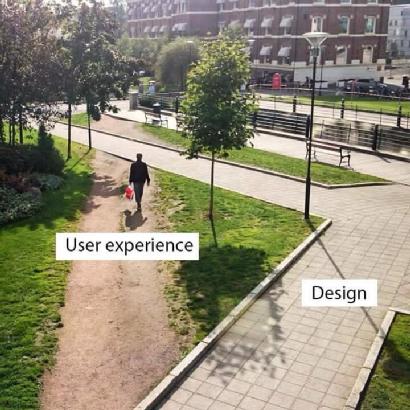
Why is the user experience so important?


Why are we still talking about feminism?


The dangers of of the 'cash transfer magic bullet'

Cash transfers, conditional or not, are a particularly dangerous movement in development. 
The research from Harvard, MIT, NPR on cash transfers has been often cited in the media. But, it is clear that the the cash transfer mechanism is a very limited and is a short-term stimulus that does not address systemic failures that keep people poor. Could this be another magic bullet that make donors feel good about giving money? Won't money just flood the systems but play no role in building systems? How is this sustainable or scaleable beyond any donor handout?

It is the system that causes poverty, and not, as is assumed under the cash transfer paradigm, people and people's willingness and ability to pay. To take this one step further it is the weak poorly-functioning system for goods, services, information, knowledge that causes poverty. if for example, there are medicines available for poor people to buy, the systemic problem is actually that medicines are not well-distributed and clearly branded with a system for verification so that counterfeits cannot creep in. If there are agents/traders/salespeople/distributors working for the big pharmas, the question is always: what are they incentivised to do? Is it to push products for commission? If so, what will the effect be on the quality of information that goes out to people on what they should buy? Who can poor people go to make sure their ability to spend isn’t subsumed by their inability to get a good quality product?

In weak systems, there are systemic constraints that trap poor people in a cycle of no/bad/sub-optimal investment. They also have no 'voice' to complain, protest, influence, push up quality. Poor people are ‘voiceless’. Cash transfers simple result in money in the pocket but no voice or influence.

Tuesday, 14 July 2015

Courage doesn’t always roar. Sometimes courage is the quiet voice at the end of the day saying, “I will try again tomorrow.” - Mary Radmacher


Why employee rankings can backfire

This NY Times article talks about how employee rankings to drive up performance can actually backfire.

In the workplace, promoting competition between individuals can have several effects. Instead of driving up performance, in an context that needs people working in teams with high levels of collaboration, there can be several opposite effects. One tool for promoting competition in order to improve performance is through HR assessments and ranking. When ranked in a list, people can exhibit the following behaviour:
  1. Some feel positive, and strive to do better in order to increase their rank or to stay at the top
  2. Some feel demoralised at the valuation of their performance, and reduce performance and fall down the table
  3. Some feel content and stick with what they are doing, thus maintaining performance and rank position
  4. Some feel suspicious and have less trust in management and the company, which may result in reducing performance or even a tendency to sabotage the process or the company
As a result, in some cases, it may be better to inform each individual privately of his/her performance and not to publicise ranking tables. In others, designing multi-level performance rewards that celebrate performance at different levels may be helpful – only rewarding those at the top may create animosity, however, rewarding ‘most improved’, ‘most innovative’, ‘most supportive in a team’ will create a positive team culture.

Source: http://www.nytimes.com/2015/07/12/business/why-employee-ranking-can-backfire.html?_r=0

Article - Digital finance for smallholder farmers - a systemic approach

This USAID Microlinks article describes a systemic approach to building financial systems for digital-based smallholder farmer finance. This approach is naturally scalable as it has the in-built mechanisms for growth.

These interventions use the following design tactics:
  1. Behaviour change principles such as, features and incentives to make it easier for people to adopt a new practice for the first time 
  2. Multi-level design - digital services can both bring in new behaviours as well as make existing good practice more efficient and automated and easier to stick to
  3. Savings and insurance services for resilience and long-term sustainability 
Source: How Digital Financial Services Can Meet The Financing Demands Of Smallholder Farmers, LIZ DIEBOLD, Agriculture Finance And Investment Lead, NANDINI HARIHARESWARA, Senior Digital Finance Advisor, And HARSHA KODALI, Agricultural Finance Specialist PUBLISHED ON JUNE 16, 2015, AVAILABLE AT WWW.MICROLINKS.ORG/BLOG/HOW-DIGITAL-FINANCIAL-SERVICES-CAN-MEET-FINANCING-DEMANDS-SMALLHOLDER-FARMERS

Achieving flow

Achieving ‘Flow’


Having a clear understanding of what you want to achieve.

Being able to concentrate for a sustained period of time.

Losing the feeling of consciousness of one's self.

Finding that time passes quickly.

Getting direct and immediate feedback.

Experiencing a balance between your ability levels, and the challenge.

Having a sense of personal control over the situation.

Feeling that the activity is intrinsically rewarding.

Lacking awareness of bodily needs.


Being completely absorbed in the activity itself.

Monday, 13 July 2015

Has Africa outgrown aid? #bbcafricadebate


A fascinating debate! I collected many of the comments made on Twitter and reflected on my own experiences and insights. I then looked for any common messages and themes of the debate.

Addressing the dangers of aid
  • Aid needs to change; but saying that Africa has outgrown aid suggests that Africa is a child that needs raising
  • Aid can be a political tool of foreign donors forcing governments and people into agreements that are 'unfair' and 'unjust'
  • Aid needs the support of better systems to monitor how it is being spent BUT aid can be limited in effectiveness when most time is spent time reporting and appeasing donors 
  • Aid is lumped in with transparency to appease donors, but not other valuable system actors, such as the citizens
  • Aid must be flexible to the changing nature of dynamic systems and economies
Making immediate changes to aid
  • Aid must be better communicated to African citizens so that they are not "voiceless citizens"
  • Aid must start to recognise the different roles for aid in the different economic and market systems in Africa 
    • such as, from Rwanda and Ethiopia, to Kenya and South Africa, to Ghana and Nigeria, to Sierra Leone and Senegal, to Tunisia and Eqypt to Chad and Niger
  • Aid must not be delivered at the mercy/desire/will of donors with demanding reporting standards; not every last penny spent can be tracked and it is more important to see broader outputs and outcomes than a tick-box of donor-driven activities
Developing a future role for aid
  • Aid must be re-conceptualised towards trade, economic development, market systems and business for poverty reduction and systemic resilience
    • in the social sector, this might mean applying systems thinking to public goods for better access by all 
  • Aid has a role to play in security and anti-terrorism as well as in institutions building and strengthening
  • Aid might eventually play a long term role in the economy as remittances and FDI - aid has been sent by African diaspora for decades and diaspora are looking for new ways to send money home and invest in local businesses
  • Aid needs to be re-designed to prevent being a tool for corruption; aid needs better practice-driven local leadership, stewardship and management 

Article - Market-based economic systems - the basics!

Economic systems

Market-based economic systems have many advantages in comparison with command-based ones. These include:

Consumer sovereignty

Resources are allocated towards the satisfaction of the consumer, who is 'king' (sovereign) - firms can only survive if they consistently satisfy consumer demand. The more they satisfy the consumer, the greater their profits.

Choice

Firms may compete with each by offering different products, providing consumers with a wide choice.

Price and non-price competition

Competition keeps prices down and drives up the quality of goods and services.

Automatic adjustment

The price mechanism works automatically, as prices convey information about relative scarcity without the need for a government.

Rationing

Prices fulfill a vital role in terms of rationing scarce resources - the greater the scarcity, the higher the price, and the more it is conserved.

Utility and profit

The price mechanism allocates resources towards products that provide the highest utility and the greatest profit, hence benefiting consumers and producers.

Efficiency

All participants have incentives to be at their most efficient. The production of goods is efficient because firms need to keep costs as low as possible.
There is a considerable incentive for the owners of factors of production to be as efficient as they can be so that they can command the highest incomes.

Innovation

Firms usually need to innovate to retain consumer loyalty and win new customers from rivals.

The disadvantages of market-based systems

However, market systems have disadvantages, including:

Under-valuing non-traded services

Some goods and services cannot easily be traded in markets, such as healthcare, education, and defence. With these goods, the value attached by market forces is unlikely to be the 'real' value of the service.

Missing markets

There is the problem of missing markets, which arises when consumers have a need or a want but where no firms are able to enter the market to supply, and markets do not form, as in the case of public goods.

Incomplete markets

There is also the problem of incomplete markets, which arises when firms only supply a part of the whole market demand, such as the case of merit goods.

Externalities

Some goods and services generate costs and benefits that are not taken account by consumers and producers. These costs and benefits are called externalities.

Lack of purchasing power

Some consumers have no purchasing power, such as the disabled, because they are not able to work in the labour market. Without work, they cannot derive an income, and are unable to purchase goods and services.

The case for mixed economies

Mixed economies combine aspects of market systems and central planning. It is accepted that mixed economies provide a more optimal allocation of scarce resources because:
  1. Markets can be used to allocate resources to producing goods and services in which they excel, such as private consumer goods like cars, computers and holidays.
  2. Planning can be used to allocate resources to those goods and services that markets fail to produce sufficiently, such as education and policing – and solve the problem of missing and incomplete markets.
  3. Governments can regulate markets to ensure that they work effectively in the interests of consumers.
  4. Governments can allocate resources towards the unemployed, and provide a basic purchasing power, via a benefits system, to the disabled and others who cannot sell their labour.

Article - Diffusion of innovations theory

Diffusion of innovations

Diffusion of innovations is a theory that seeks to explain how, why, and at what rate new ideas and technology spread through cultures. Everett Rogers, a professor of communication studies, popularized the theory in his book Diffusion of Innovations; the book was first published in 1962, and is now in its fifth edition (2003).[1] Rogers argues that diffusion is the process by which an innovation is communicated through certain channels over time among the participants in a social system. The origins of the diffusion of innovations theory are varied and span multiple disciplines. Rogers proposes that four main elements influence the spread of a new idea: the innovation itself, communication channels, time, and a social system. This process relies heavily on human capital. The innovation must be widely adopted in order to self-sustain. Within the rate of adoption, there is a point at which an innovation reaches critical mass. The categories of adopters are: innovators, early adopters, early majority, late majority, and laggards.[2] Diffusion manifests itself in different ways in various cultures and fields and is highly subject to the type of adopters and innovation-decision process.
The key elements in diffusion research are:
ElementDefinition
InnovationInnovations are a broad category, relative to the current knowledge of the analyzed unit. Any idea, practice, or object that is perceived as new by an individual or other unit of adoption could be considered an innovation available for study.[14]
AdoptersAdopters are the minimal unit of analysis. In most studies, adopters are individuals, but can also be organizations (businesses, schools, hospitals, etc.), clusters within social networks, or countries.[15]
Communication channelsDiffusion, by definition, takes place among people or organizations. Communication channels allow the transfer of information from one unit to the other.[16]Communication patterns or capabilities must be established between parties as a minimum for diffusion to occur.[17]
TimeThe passage of time is necessary for innovations to be adopted; they are rarely adopted instantaneously. In fact, in the Ryan and Gross (1943) study on hybrid corn adoption, adoption occurred over more than ten years, and most farmers only dedicated a fraction on their fields to the new corn in the first years after adoption.[6][18]
Social systemThe social system is the combination of external influences (mass media, organizational or governmental mandates) and internal influences (strong and weak social relationships, distance from opinion leaders).[19] There are many roles in a social system, and their combination represents the total influences on a potential adopter.[20]

Five stages of the adoption process
StageDefinition
KnowledgeThe individual is first exposed to an innovation, but lacks information about the innovation. During this stage the individual has not yet been inspired to find out more information about the innovation.
PersuasionThe individual is interested in the innovation and actively seeks related information/details.
DecisionThe individual takes the concept of the change and weighs the advantages/disadvantages of using the innovation and decides whether to adopt or reject the innovation. Due to the individualistic nature of this stage, Rogers notes that it is the most difficult stage on which to acquire empirical evidence.[11]
ImplementationThe individual employs the innovation to a varying degree depending on the situation. During this stage the individual also determines the usefulness of the innovation and may search for further information about it.
ConfirmationThe individual finalizes his/her decision to continue using the innovation. This stage is both intrapersonal (may cause cognitive dissonance) and interpersonal, confirmation the group has made the right decision.
Change agents bring innovations to new communities– first through the gatekeepers, then through the opinion leaders, and so on through the community.
Adopter categoryDefinition
InnovatorsInnovators are willing to take risks, have the highest social status, have financial liquidity, are social and have closest contact to scientific sources and interaction with other innovators. Their risk tolerance allows them to adopt technologies that may ultimately fail. Financial resources help absorb these failures. [40]
Early adoptersThese individuals have the highest degree of opinion leadership among the adopter categories. Early adopters have a higher social status, financial liquidity, advanced education and are more socially forward than late adopters. They are more discreet in adoption choices than innovators. They use judicious choice of adoption to help them maintain a central communication position.[41]
Early MajorityThey adopt an innovation after a varying degree of time that is significantly longer than the innovators and early adopters. Early Majority have above average social status, contact with early adopters and seldom hold positions of opinion leadership in a system (Rogers 1962, p. 283)
Late MajorityThey adopt an innovation after the average participant. These individuals approach an innovation with a high degree of skepticism and after the majority of society has adopted the innovation. Late Majority are typically skeptical about an innovation, have below average social status, little financial liquidity, in contact with others in late majority and early majority and little opinion leadership.
LaggardsThey are the last to adopt an innovation. Unlike some of the previous categories, individuals in this category show little to no opinion leadership. These individuals typically have an aversion to change-agents. Laggards typically tend to be focused on "traditions", lowest social status, lowest financial liquidity, oldest among adopters, and in contact with only family and close friends.
LeapfroggersWhen resistors upgrade they often skip several generations in order to reach the most recent technologies.
Source: Wikipedia

Quotes from the TV series, Criminal Minds, series 4-7

The quotes are from series 4 to series 7. The full list is available at the Criminal Minds wiki page here.

"Justice without force is powerless; force without justice is tyrannical" - Blaise Pascal

"He who fights with monsters might take care lest he thereby become a monster. And if you gaze for long into an abyss, the abyss gazes also into you." - Friedrich Nietzsche

"Men are more ready to repay an injury than a benefit, because gratitude is a burden and revenge a pleasure." - Tacitus

"Anything you cannot relinquish when it has outlived its usefulness, possesses you. And in this materialistic age, a great many of us are possessed by our possessions." - Mildred Listette Norman

"Experience is a brutal teacher, but you learn. My God, do you learn." - C.S. Lewis

"A family is a place where minds come in contact with one another. If these minds love one another, the home will be as beautiful as a flower garden. But if these minds get out of harmony with one other it is like a storm that plays havoc with the garden." - Budhha

"We all wear masks and the time comes when we cannot remove them without removing our own skin." - André Berthiaume

“Love feels no burden, thinks nothing of its trouble, attempts what is above its strength, pleads no excuse for impossibility, for it thinks all things are lawful for itself and all things are possible.” - Thomas A. Kempis

"What lies in our power to do, lies in our power not to do." - Aristotle


Quotes from the TV series, Criminal Minds, series 1-4

The quotes are from series 1 to series 4. The full list is available at the Criminal Minds wiki page here.

"Imagination is more important than knowledge. Knowledge is limited. Imagination encircles the world." - Albert Einstein

"Don't bother just to be better than your contemporaries or predecessors. Try to be better than yourself." - William Faulkner

"When a good man is hurt, all who would be called good must suffer with him." - Euripides

"A belief is not merely an idea the mind possesses. It is an idea that possesses the mind." - Robert Oxton Bolton

"The individual has always had to struggle to keep from being overwhelmed by the tribe." - Fredrich Nietzsche

"I object to violence because when it appears to do good, the good is only temporary. The evil it does is permanent"- Mahatma Gandhi

"Whoever undertakes to set himself up as judge in the field of truth and knowledge is shipwrecked by the laughter of the gods." - Albert Einstein

"In a time of universal deceit, telling the truth is a revolutionary act." - George Orwell

"The defects and faults of the mind are like wounds in the body. After all imaginable care has been taken to heal them up, still there will be a scar left behind." - Francois de la Roche Foucauld

"It has been said that time heals all wounds. I do not agree. The wounds remain. In time, the mind, protecting its sanity, covers them with scar tissue, and the pain lessens, but it is never gone." - Rose Kennedy

"Out of suffering have emerged the strongest souls. The most massive characters are seared with scars." - Khalil Gibran

"Man is least himself when he talks in his own person. Give him a mask, and he will tell you the truth." - Oscar Wilde

"We can easily forgive a child who is afraid of the dark. The real tragedy of life is when men are afraid of the light" - Plato

"Remember that all through history, there have been tyrants and murderers, and for a time, they seem invincible. But in the end, they always fall. Always." - Mahatma Gandhi

"You gain strength, courage, and confidence by every experience in which you really stop to look fear in the face. You must do the thing which you think you cannot do." - Eleanor Roosevelt

"Fairy tales do not tell children that dragons exist. Children already know that dragons exist. Fairy tales tell children that dragons can be killed." - G.K. Chesterton

Superman is, after all, an alien life form. He's simply the acceptable face of invading realities." - Clive Barker

"The noir hero is a knight in blood caked armor. He's dirty and he does his best to deny the fact that he's a hero the whole time.” - Frank Miller

"The noir hero is a knight in blood caked armor. He's dirty and he does his best to deny the fact that he's a hero the whole time.” - John Steinbeck

"All changes, even the most longed for, have their melancholy; for what we leave behind us is a part of ourselves. We must die to one life before we can enter another." - Antole France

"The man visited by ecstasies and visions, who takes dreams for realities is an enthusiast; the man who supports his madness with murder is a fanatic." - Voltaire

"A fool's paradise is a wise man's hell." - Thomas Fuller

“What was silent in the father speaks in the son, and often I found in the son the unveiled secret of the father.” - Friedrich Nietzsche

"Let us consider that we are all insane. It will explain us to each other; it will unriddle many riddles..." - Mark Twain

"I never teach my pupils; I only attempt to provide the conditions in which they can learn." - Albert Einstein

"Light thinks it travels faster than anything but it is wrong. No matter how fast light travels, it finds the darkness has always got there first, and is waiting for it." - Terry Pratchett

“The human voice can never reach the distance that is covered by the still small voice of conscience.” - Mahatma Gandhi


"Security is mostly a superstition. It does not exist in nature, nor do the children of men as a whole experience it" - Helen Keller